
Boutique Retailers in Emerging Markets Leverage Consolidated Account Systems and Monitoring Networks to Manage Revenue Fluctuations
Retail operations in developing economies often face irregular income patterns driven by seasonal demand, supply chain disruptions, and shifting consumer preferences, and boutique retailers have adopted unified account structures to consolidate inflows from multiple channels into single operational ledgers. These structures allow businesses to pool revenues from cash, card, and digital wallet transactions without maintaining separate ledgers for each method, which reduces reconciliation errors and improves cash visibility across locations. Data released in October 2026 by regional financial inclusion programs indicated that merchants using such consolidated setups recorded up to 22 percent faster access to working capital compared with those relying on fragmented banking arrangements.
Core Mechanisms Behind Unified Account Structures
Unified accounts function by routing all payment types through a central merchant identifier that interfaces directly with local banking partners, and this setup enables automatic allocation of funds into operating, reserve, and tax sub-accounts based on predefined rules. Retailers in markets such as Vietnam and Kenya have implemented these systems to handle daily sales swings that can exceed 40 percent week-to-week, according to figures from the Asian Development Bank. The architecture supports multi-currency holdings where cross-border suppliers accept payments, which minimizes foreign exchange conversion costs and keeps balances aligned with inventory cycles.
Continuous oversight networks complement these accounts by deploying real-time transaction monitoring dashboards that flag deviations in expected cash flow patterns. These networks connect point-of-sale terminals, inventory systems, and bank feeds into a single oversight layer, allowing operators to detect anomalies such as sudden drops in card authorizations or delayed wallet settlements within hours rather than days. Observers note that such integration has become standard practice in several Southeast Asian retail corridors since 2024, driven by regulatory updates that require merchants to maintain auditable records of variable inflows.
Implementation Patterns Across Regions
In Latin American contexts, boutique operators have paired unified accounts with mobile-linked oversight tools that push daily variance reports to store managers via secure applications. This approach addresses charge volume inconsistencies caused by tourism fluctuations and local festival cycles, and studies from the Inter-American Development Bank show participating retailers reduced overdraft incidents by 31 percent within the first year of adoption. African markets have followed a similar trajectory, with oversight networks incorporating SMS-based alerts for smaller merchants who lack consistent internet access, ensuring that account balances remain visible even during connectivity gaps.
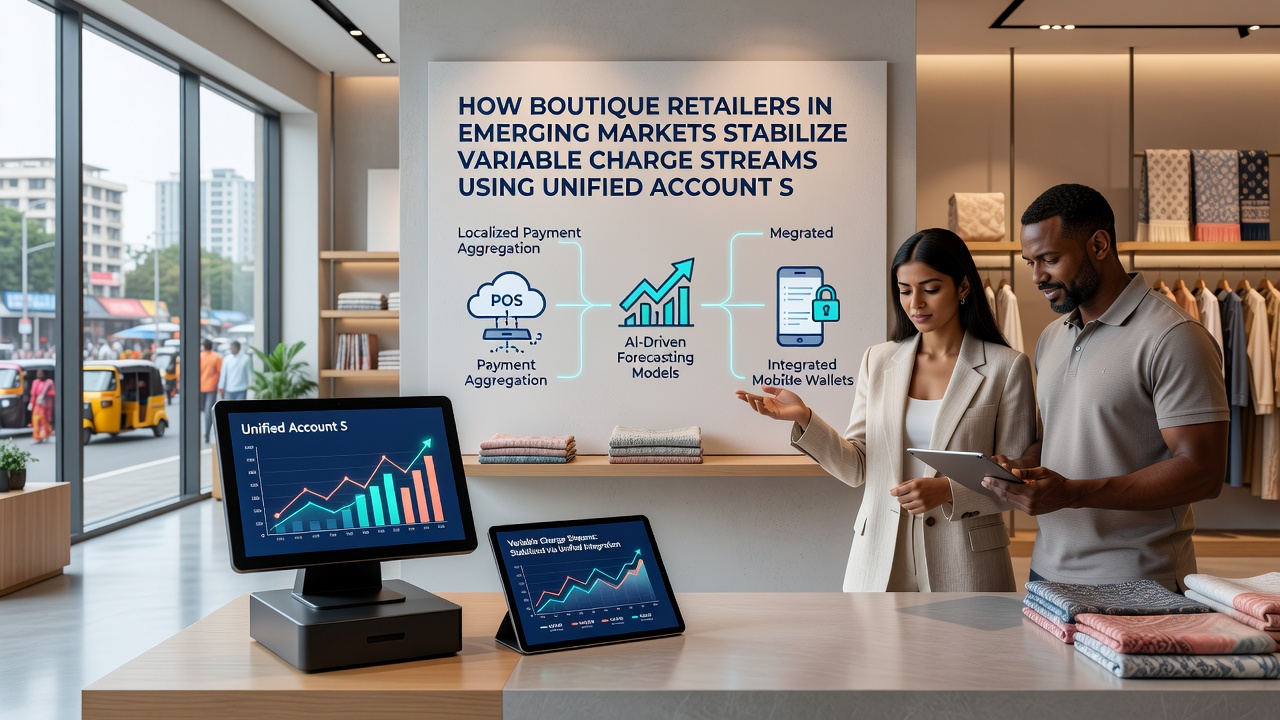
What's interesting is how these networks scale with business size. Smaller outlets start with basic threshold alerts that notify owners when daily takings fall below historical averages, while mid-sized chains expand the same framework to include predictive modeling that forecasts weekly shortfalls based on weather data or competitor promotions. Researchers from the University of Cape Town documented cases where this layered monitoring prevented stockouts during peak periods by triggering early supplier payments drawn from reserve sub-accounts.
Regulatory and Infrastructure Influences
Central banks in emerging economies have introduced guidelines that encourage unified account adoption through simplified licensing for multi-channel merchant services, and these policies have accelerated uptake since mid-2025. Oversight networks must comply with data localization rules in several jurisdictions, which has prompted providers to establish regional data centers that keep transaction logs within national borders while still allowing cross-border analytics. The Bank for International Settlements published a 2026 report noting that standardized reporting formats tied to these networks have improved tax compliance rates among small retailers by streamlining the submission of variable income declarations.
Yet infrastructure gaps remain a factor. Retailers in rural zones sometimes rely on hybrid models where offline transaction batches sync with oversight platforms once daily, and this delay can affect the precision of real-time alerts. Operators mitigate the issue by maintaining higher reserve balances in unified accounts to cushion against synchronization lags, a practice that data from national payments associations shows has kept service disruptions below 3 percent in monitored districts.
Conclusion
Boutique retailers across emerging markets continue to refine unified account structures and continuous oversight networks as core tools for managing fluctuating charge streams. The combination of consolidated ledgers and connected monitoring layers provides clearer visibility into revenue patterns, supports faster operational decisions, and aligns with evolving regulatory expectations. As infrastructure expands and reporting standards mature, these approaches are expected to remain central to financial stability for small-scale retail operations in dynamic economic environments.