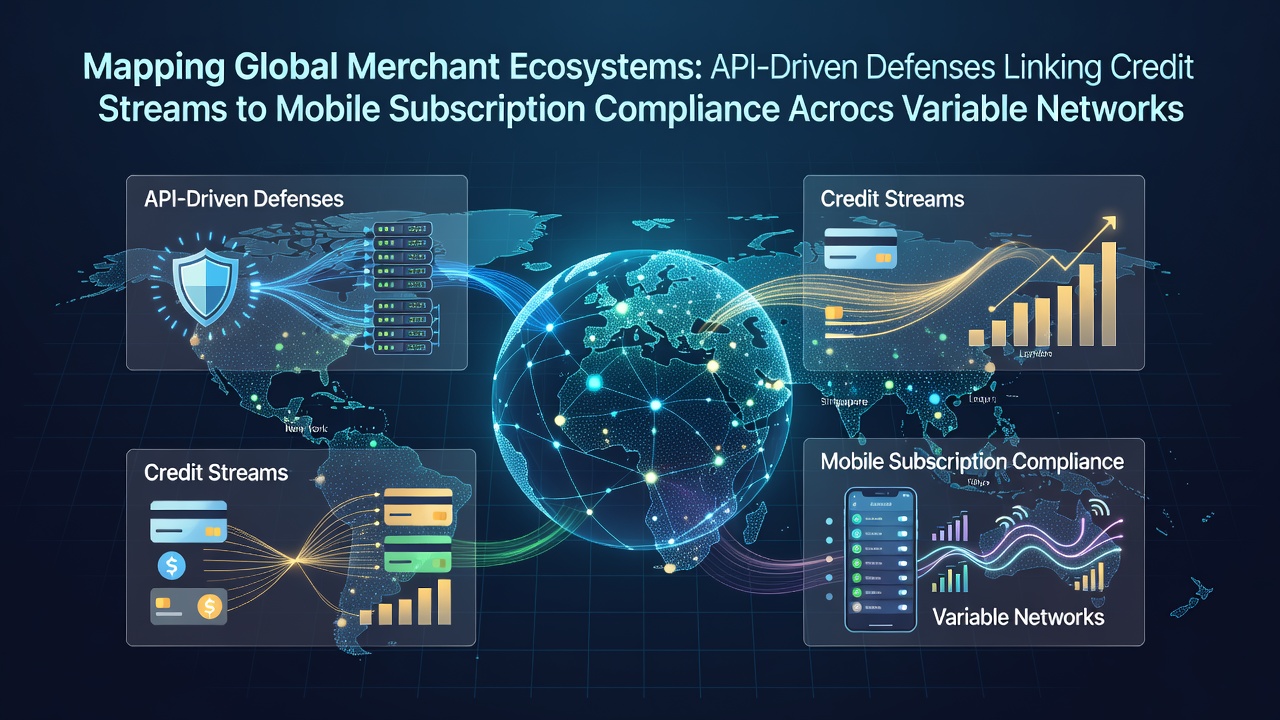
Mapping Global Merchant Ecosystems: API-Driven Defenses Linking Credit Streams to Mobile Subscription Compliance Across Variable Networks
Global merchant ecosystems have evolved into intricate webs where credit streams flow through mobile subscription models that must meet compliance standards across networks with differing speeds, protocols, and regulatory requirements. Researchers at institutions studying payment infrastructure note that API frameworks serve as the primary connectors, allowing real-time verification of transactions while adapting to variable network conditions that range from high-latency satellite links in remote regions to ultra-fast 5G environments in urban centers.
Core Components of API Integration in Merchant Ecosystems
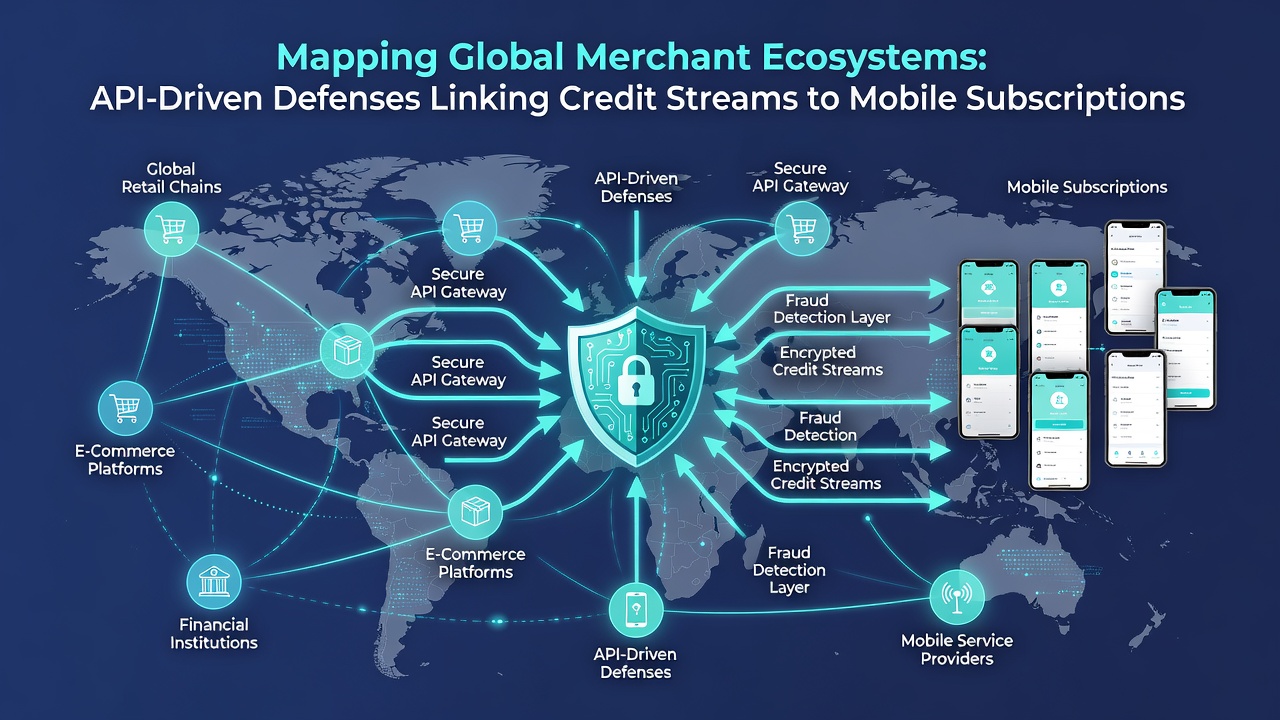
API-driven defenses operate by embedding compliance checks directly into the data pathways that link merchant accounts with mobile billing systems, and this approach reduces the window for discrepancies that arise when credit authorization occurs on one network yet settlement processes complete on another. Data from the European Central Bank indicates that cross-border mobile subscription volumes grew steadily through 2025, with API endpoints handling an increasing share of authentication requests that incorporate device location, network type, and subscription cycle variations. Those who map these ecosystems observe that the architecture typically includes layered gateways, each responsible for specific functions such as tokenization of credit details, fraud pattern matching against historical transaction sets, and automatic adjustment of billing intervals when a subscriber moves between networks with incompatible timing standards.
Variable networks introduce additional complexity because latency differences can delay the return of compliance confirmations, yet modern APIs incorporate retry logic and fallback protocols that maintain continuity without violating regional rules on data residency or consumer protection. Observers tracking merchant operations report that companies deploying these systems often segment their credit streams according to the originating network category, which allows targeted application of compliance rules rather than a one-size-fits-all approach that would slow processing across the board.
Regional Variations and Compliance Mapping
Mapping efforts reveal distinct patterns when comparing North American, European, and Asia-Pacific merchant setups, where the Bank of Canada has documented how domestic mobile subscription services integrate API calls to national payment rails while simultaneously supporting international roaming scenarios. In August 2026, updates to certain trans-Pacific data transfer agreements are scheduled to take effect, prompting ecosystem architects to revise their API schemas so that credit stream metadata travels alongside subscription status flags without triggering jurisdictional conflicts. Research indicates that such proactive adjustments help maintain uninterrupted service for users whose billing cycles span multiple regulatory zones.
Further analysis shows that API defenses also address the challenge of network handoffs during active subscriptions, because a mobile device switching from terrestrial 4G to satellite backhaul can experience temporary loss of real-time connectivity, and the systems compensate by caching compliance tokens locally until the primary link resumes. Those studying these patterns emphasize that the resulting audit trails must remain intact and attributable to the correct network segment, a requirement that influences how logging modules are designed within the API stack.
Security Layers and Data Flow Management
Security within these mapped ecosystems relies on continuous monitoring of credit stream integrity combined with subscription compliance flags that update dynamically, and this dual-tracking method allows merchants to isolate anomalies that appear only when network conditions change. Industry reports from the Australian Payments Network highlight instances where API endpoints detected mismatched device identifiers during network transitions, enabling immediate suspension of recurring charges until manual verification occurred. Such mechanisms demonstrate how the mapping of global merchant ecosystems supports both operational efficiency and regulatory adherence without requiring separate compliance teams for each region served.
Additional safeguards include encryption standards applied at the API boundary and role-based access controls that limit exposure of credit details to only those systems authorized for the specific subscription tier, while variable network speeds necessitate adaptive encryption key lengths that balance security strength against transmission time. Experts mapping these flows note that the resulting architectures often feature redundant compliance nodes positioned at strategic geographic points, ensuring that even if one node experiences congestion the overall credit stream validation process continues uninterrupted.
Future Developments in Ecosystem Mapping
Continued refinement of these API linkages is expected as new network technologies emerge and as regulatory bodies issue updated guidance on mobile billing practices, yet the foundational principle remains consistent: accurate mapping of merchant ecosystems enables precise alignment between credit authorization events and subscription compliance requirements regardless of the underlying network variability. Organizations that maintain detailed ecosystem maps gain clearer visibility into potential bottlenecks and can adjust their API configurations accordingly before service disruptions affect end users.
Conclusion
The comprehensive mapping of global merchant ecosystems through API-driven defenses establishes reliable connections between credit streams and mobile subscription compliance requirements, even when those connections span networks with widely varying characteristics. Data continues to show that organizations investing in such mapped infrastructures achieve higher rates of successful transaction completion while satisfying diverse regulatory expectations across regions. As network technologies advance and compliance frameworks evolve, the role of these API architectures in sustaining seamless credit flow and subscription management remains central to merchant operations worldwide.